








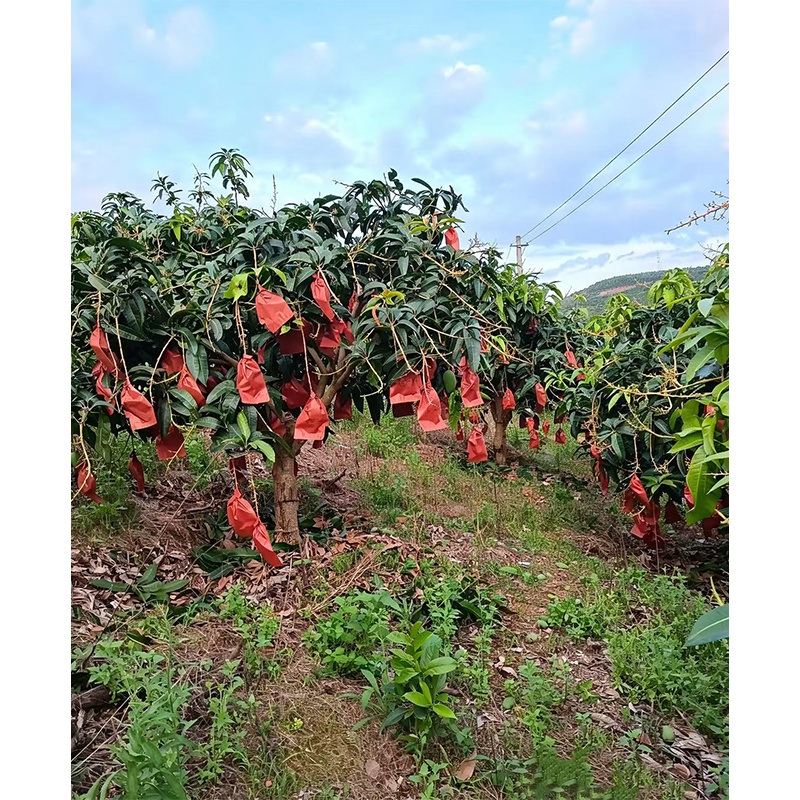
When Climate Doesn't Cooperate: A Bagging Survival Guide
Bagging works—but only if your strategy adapts to the weather. Heatwaves, heavy rains, and typhoons each demand a different response. Here's what to do.
---
🔥 Heatwaves
The risk: Bags can turn into ovens. Double-layer bags trap heat; internal temps above 35°C with humidity below 40% can damage fruit as badly as excess moisture.
Your move:
· Irrigate early morning or late evening (drip or sprinkler) during persistent heat.
· Fasten bags to the leaf base above the fruiting branch, not the fruit stalk—this prevents stem burn.
· For mangoes and other heat-sensitive crops, use heat-reflective fruit bags—they're non-negotiable in hot spells.
---
🌧️ Heavy Rains
The risk: Waterlogged bags + high humidity = fungal paradise (anthracnose, downy mildew, gray mold).
Your move:
· After each heavy rain, inspect bag bottoms—replace torn or waterlogged ones.
· Clear drainage ditches before storms hit.
· Once soil dries slightly, loosen topsoil to improve root aeration.
· Apply high-potassium fertilizer + calcium & silicon to strengthen skin and prevent cracking.
Spray reminder: Light rain within 7 days of spraying? No re-spray needed. Heavy downpour? Reapply before bagging again.
---
💨 Typhoons
The risk: Wind knocks fruit off; floods trigger disease.
Before:
· Reinforce trellises, stakes, and greenhouse film.
· Support trunks; secure loose branches.
· Harvest early for fruit near maturity.
After:
· Straighten tilted plants; firm soil.
· Prune broken branches; apply wound sealant.
· Clear drains; remove fallen fruit and debris to stop disease spread.
---
Bottom line: Choose the right bag, adjust your practices to the forecast, and stay proactive. Even the best fruit bag fails without a climate-smart strategy.
---
Need help selecting fruit bags for your region's weather? Contact us for tailored advice.