







Types of Fruit Wrapping Paper Materials: Which One Is Best for Freshness & Safety?
We all know fruit wrapping paper keeps produce fresh, clean, and protected during shipping and storage. But have you ever wondered what makes a good fruit wrapping paper? The secret lies in its material. Different fruit skins, shelf-life needs, and logistics environments require different paper materials. Choosing the right wrapping paper is not just about aesthetics — it directly determines fruit freshness retention, safety standards, and environmental friendliness. Today, we will break down the most common fruit wrapping paper materials, their unique features, benefits, and suitable fruit types to help you understand why material selection matters so much in fresh fruit packaging.
1. Traditional Kraft Paper: Cost-Effective Basic Protection
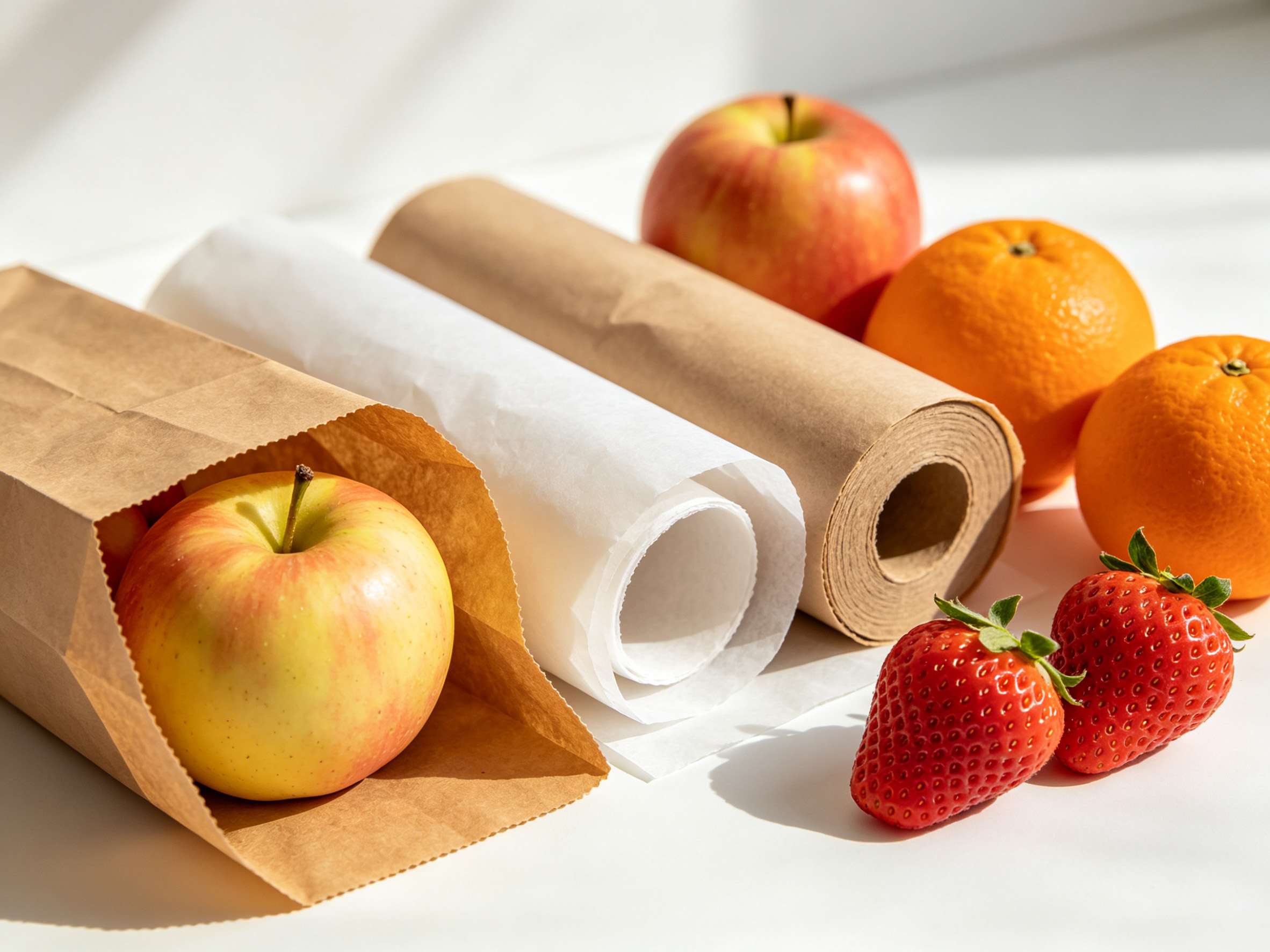
Kraft paper is one of the most classic and widely used fruit wrapping materials. Made from natural wood pulp with a sturdy, thick texture, it boasts excellent tensile strength and wear resistance. Unlike thin ordinary paper, kraft paper is not easy to tear or deform during long-distance transportation and repeated handling, providing reliable physical protection for fruits.
This material is breathable, dust-proof, and highly cost-effective, making it ideal for bulk fruits with thick, durable peels. It is commonly used for oranges, grapefruits, pears, and apples. However, ordinary kraft paper has obvious limitations: it lacks waterproof and moisture-proof functions. In humid environments, it easily absorbs water and becomes soft, failing to resist mold and moisture erosion. Therefore, pure kraft paper is mostly used for short-distance transportation and normal-temperature shelf display of hardy fruits.
2. Wax-Coated Wrapping Paper: Moisture-Proof & Anti-Mold Workhorse
Wax-coated paper is an upgraded version of traditional wrapping paper, specially optimized for moisture and mildew resistance. The surface is coated with a thin layer of food-grade paraffin wax, which forms a dense protective film. This structure effectively blocks external moisture, prevents fruit surface water loss, and inhibits the growth of mold and bacteria.
With dual advantages of waterproofing and moderate air permeability, wax-coated paper solves the biggest pain point of ordinary paper packaging. It is the preferred material for delicate, moisture-prone fruits such as peaches, plums, kiwis, and grapes. It can greatly reduce fruit rot and peel wrinkling during cold storage and long-term logistics. Meanwhile, the food-grade wax coating is non-toxic and safe, meeting international food packaging standards, so consumers do not need to worry about safety risks. The only minor drawback is that wax-coated paper is not fully degradable compared with plant fiber paper, making it less eco-friendly.
3. Tissue Wrapping Paper: Ultra-Soft Protection for Delicate Fruits
Ultra-thin, soft fruit tissue paper is designed for super delicate, easily bruised fruits. Made from high-purity wood pulp fiber, it is lightweight, soft, and lint-free, with an ultra-smooth surface that will not scratch fragile fruit peels. Its unique buffer effect can effectively reduce extrusion and friction damage during stacking and transportation.
This material features strong moisture absorption and mild air permeability. It can absorb excess condensation on the surface of berries, cherries, and loquats, keeping the fruit surface dry and fresh. It is widely used for high-value fragile fruits that are difficult to store and transport. Although its waterproof performance is average, its excellent soft protection is irreplaceable for premium fresh produce. It is the standard packaging material for high-end fruit gift boxes and imported fruits.
4. Degradable Plant Fiber Paper: Eco-Friendly New Trend
Against the backdrop of global carbon neutrality and green consumption, biodegradable plant fiber wrapping paper has become the mainstream upgraded material in the fruit packaging industry. It is made from recycled sugarcane fiber, bamboo pulp, and straw pulp, abandoning chemical synthetic raw materials.
This material integrates multiple advantages: it is soft and protective like tissue paper, moisture-proof and breathable like wax-coated paper, and completely biodegradable. It can naturally decompose in soil within a short period after use, producing no white pollution. In addition, plant fiber paper can be added with natural antibacterial ingredients during production, which can inhibit the reproduction of harmful bacteria on the fruit surface and further extend the fresh-keeping cycle.
At present, more and more organic fruit brands, exported fruits, and high-end supermarket chains are replacing traditional plastic and waxed packaging with plant fiber wrapping paper. It balances protection, freshness, safety, and environmental protection, perfectly fitting the sustainable development trend of the fresh food industry.
5. Functional Antibacterial Fresh-Keeping Paper: High-Tech Premium Material
As consumers pursue higher food freshness and safety, high-tech functional fruit wrapping paper has emerged in the market. This upgraded material adds food-grade antibacterial agents and ethylene absorption factors to the paper pulp. It can actively absorb ethylene released by fruits, slow down fruit ripening and aging, and inhibit the growth of E. coli and mold.
Functional fresh-keeping paper is suitable for seasonal fruits with short shelf life, such as strawberries, blueberries, mangoes, and lychees. It can extend the fresh-keeping period of fruits by 3-7 days under normal temperature and cold storage conditions. Although its cost is higher than traditional materials, it greatly reduces fruit loss rate and improves commodity value, making it the best choice for cross-border fruit transportation and long-distance cold chain logistics.
Final Thoughts: Material Determines Freshness Quality
Fruit wrapping paper is never just ordinary paper. Every different material carries targeted packaging functions. Thick kraft paper is for basic protection, wax-coated paper focuses on moisture-proof and anti-mold, soft tissue paper protects delicate fruits, plant fiber paper leads green development, and functional fresh-keeping paper empowers high-efficiency preservation.
Understanding the differences in wrapping paper materials helps us better recognize the importance of refined fruit packaging. In the future, with the continuous progress of packaging technology, fruit wrapping paper will develop towards more environmentally friendly, intelligent, and functional directions, bringing fresher, safer, and greener fresh fruit products to consumers around the world.